
+
 wechat number:TWJJMM0618

wechat number:TWJJMM0618
Becoming a leader in the plastic packaging container industry
Shaping the Future, Inclusive of Everything
ESOS Helpline
0512-52557888

You Are Here:Home > News Center
> Industry Dynamics
News navigation
Recommended news

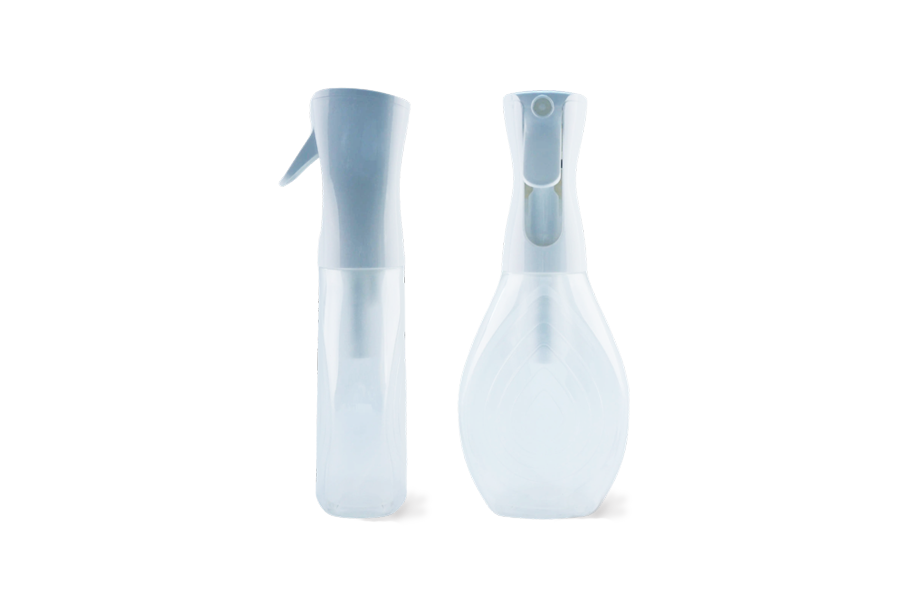
What are the main advantages of sustainable spray
source:www.cssssy.com | Release time:2025-12-15
Sustainable spray is a spray related product or technology that conforms to the concept of green development. Its advantages are not only reflected in the optimization of the use experience, but also focus on the core dimensions of resource conservation, environmental friendliness, etc. It is suitable for daily chemical, industrial, agricultural and other fields. The specific advantages are as follows:
1. More efficient and convenient user experience
Spray is stable and evenly covered: this kind of spray is often equipped with a pressure storage mechanism or an optimized nozzle design. For example, some sustainable spray bottles are equipped with a pressure storage chamber to achieve the mode of "press energy storage+continuous release", avoiding the intermittent problem of traditional spray. At the same time, its ultra-fine atomization mechanism can make the spray particles more uniform. Whether it is a facial spray in the beauty field or a coating spray in the industry, it can make the liquid evenly cover the target area and improve the use effect.
It is suitable for a variety of scenarios: for large-scale spraying scenarios, such as gardening irrigation, industrial workshop cleaning, etc., sustainable spray does not need repeated pressing or frequent operation, and can continue spraying, greatly improving the operating efficiency; In addition, some industrial sustainable spray systems support customized nozzle and installation angle adjustment, which can adapt to different process requirements such as automobile parts cooling and chemical reaction kettle atomization.
2. More efficient resource utilization and reduced usage costs
Reduce the consumption of various raw materials: with the help of precision spray control technology, sustainable spray can correctly control the amount of spraying and avoid waste caused by overspray. For example, in fiber manufacturing, the amount of surfactants can be reduced; During metal processing, it can evenly and appropriately spray oil on the steel strip to reduce rework costs; In the field of agriculture, it is also possible to correctly control the spraying amount of pesticides and nutrient solutions, reducing agricultural waste.
Significantly save energy and water resources: the optimized sustainable spray system can reduce water consumption through the design of low flow nozzles, etc. After a snack manufacturer replaced the relevant nozzles, the annual water consumption decreased by 500 million gallons, saving a lot of costs; The reduction in water consumption will also lower the energy consumption for pumping and heating water bodies. In addition, some technologies can further reduce energy consumption by replacing compressed air sources, such as reducing the energy consumption of a large number of cubic feet for canning manufacturers.
3. More environmentally friendly and in line with environmental requirements
Reduce pollutant emissions: green solvents with low volatile organic compounds (VOCs) are often used in the formulation of sustainable spray to replace traditional highly polluting solvents and reduce air pollution during use; At the same time, its biodegradable raw material components can be naturally decomposed by microorganisms after use, and will not remain in soil or water for a long time, reducing damage to the ecosystem.
Reduction of potential environmental safety hazards: correct spray control can avoid problems such as liquid accumulation and fogging on the ground caused by overspray, which not only reduces safety risks such as slipping, but also avoids excessive chemical volatilization affecting air quality. For example, in scenarios such as bakeries, the use of chemicals can be reduced to ensure the health of workers and avoid chemical contamination of food and the surrounding environment.
4. Stronger packaging and recyclability, reducing waste
Sustainable spray often adopts environmental protection design in packaging, for example, with removable PET bottles and other recyclable containers to facilitate the classification, recycling and recycling of packaging materials; Some products have also optimized their packaging structure, reducing the thickness and volume of packaging materials and minimizing the generation of packaging waste. At the same time, its core components such as nozzles and pump bodies are designed to be more durable, reducing the waste generated by frequent replacement due to component damage and extending the overall service life of the product.
1. More efficient and convenient user experience
Spray is stable and evenly covered: this kind of spray is often equipped with a pressure storage mechanism or an optimized nozzle design. For example, some sustainable spray bottles are equipped with a pressure storage chamber to achieve the mode of "press energy storage+continuous release", avoiding the intermittent problem of traditional spray. At the same time, its ultra-fine atomization mechanism can make the spray particles more uniform. Whether it is a facial spray in the beauty field or a coating spray in the industry, it can make the liquid evenly cover the target area and improve the use effect.
It is suitable for a variety of scenarios: for large-scale spraying scenarios, such as gardening irrigation, industrial workshop cleaning, etc., sustainable spray does not need repeated pressing or frequent operation, and can continue spraying, greatly improving the operating efficiency; In addition, some industrial sustainable spray systems support customized nozzle and installation angle adjustment, which can adapt to different process requirements such as automobile parts cooling and chemical reaction kettle atomization.
2. More efficient resource utilization and reduced usage costs
Reduce the consumption of various raw materials: with the help of precision spray control technology, sustainable spray can correctly control the amount of spraying and avoid waste caused by overspray. For example, in fiber manufacturing, the amount of surfactants can be reduced; During metal processing, it can evenly and appropriately spray oil on the steel strip to reduce rework costs; In the field of agriculture, it is also possible to correctly control the spraying amount of pesticides and nutrient solutions, reducing agricultural waste.
Significantly save energy and water resources: the optimized sustainable spray system can reduce water consumption through the design of low flow nozzles, etc. After a snack manufacturer replaced the relevant nozzles, the annual water consumption decreased by 500 million gallons, saving a lot of costs; The reduction in water consumption will also lower the energy consumption for pumping and heating water bodies. In addition, some technologies can further reduce energy consumption by replacing compressed air sources, such as reducing the energy consumption of a large number of cubic feet for canning manufacturers.
3. More environmentally friendly and in line with environmental requirements
Reduce pollutant emissions: green solvents with low volatile organic compounds (VOCs) are often used in the formulation of sustainable spray to replace traditional highly polluting solvents and reduce air pollution during use; At the same time, its biodegradable raw material components can be naturally decomposed by microorganisms after use, and will not remain in soil or water for a long time, reducing damage to the ecosystem.
Reduction of potential environmental safety hazards: correct spray control can avoid problems such as liquid accumulation and fogging on the ground caused by overspray, which not only reduces safety risks such as slipping, but also avoids excessive chemical volatilization affecting air quality. For example, in scenarios such as bakeries, the use of chemicals can be reduced to ensure the health of workers and avoid chemical contamination of food and the surrounding environment.
4. Stronger packaging and recyclability, reducing waste
Sustainable spray often adopts environmental protection design in packaging, for example, with removable PET bottles and other recyclable containers to facilitate the classification, recycling and recycling of packaging materials; Some products have also optimized their packaging structure, reducing the thickness and volume of packaging materials and minimizing the generation of packaging waste. At the same time, its core components such as nozzles and pump bodies are designed to be more durable, reducing the waste generated by frequent replacement due to component damage and extending the overall service life of the product.
Previous:
What are the characteristics of multi-layer vacuu…
Next:
What are the applications of foam bottles in the …
【Related articles】
- Homepage
- Contact Us
- About Us
- Product Center
- News Center
- MESSAGE

- CHANGSHU SHINE PLASTIC INDUSTRY CO.,LTD Phone:0512-52557888 Mailbox:shenshisuye@163.com Company address:No. 20 Guangyuan Road, South Development Zone, Zhitang Town, Changshu City, Jiangsu Province
-
 Scan your phone
苏ICP备18013154号-1
Technical Support:LanGe
Technical Support:LanGe
 home
home
 WeChat
 telephone